
Understanding the Mosquito: A Guide to its Behavior and Habits
The biology that matters for your yard: breeding water, larval timing, and the layered control that works.
Read post →An In2Care Mosquito Trap is a dark, water-filled station that turns egg-laying mosquitoes into carriers of their own control. Females that visit it pick up a larvicide and spread it to the other breeding spots around your yard, and a naturally occurring fungus kills them within about nine days.
It is a smart tool, but not a magic one. The research shows it works best when there are enough stations, when standing water around the yard is dealt with, and when it is paired with treatments that knock down the adult mosquitoes already flying. Here is how it works, what the studies actually found, and where it fits.
The In2Care Mosquito Station is a black container filled with about 5 quarts of water. A ring floats on the surface holding a strip of gauze coated with a fine powder, and the refill packet (called In2Mix) also includes odor tablets that make the water smell like a good place to lay eggs.
The powder carries two active ingredients, registered with the EPA under Reg. No. 91720-1:
The clever part is that the mosquitoes do the work. The process has three stages:
Meanwhile the fungus infects the adult female and kills her within about nine days, often before she can lay many more eggs. That is also why you will not see a pile of dead mosquitoes in the station. It is not a trap that holds them. They leave, spread the larvicide, and die elsewhere.
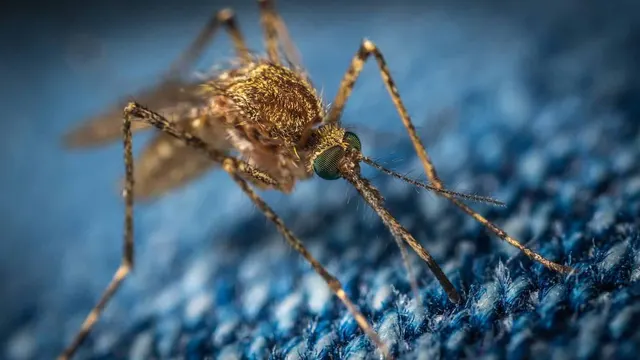
The label covers Aedes and Culex mosquitoes. In Central Texas the Aedes group is the one most people notice: the Asian tiger mosquito and the yellow fever mosquito, both aggressive daytime biters that breed in small containers of water around the house. According to the Texas Department of State Health Services, both species are found throughout Texas and can spread viruses such as Zika, dengue, and chikungunya.
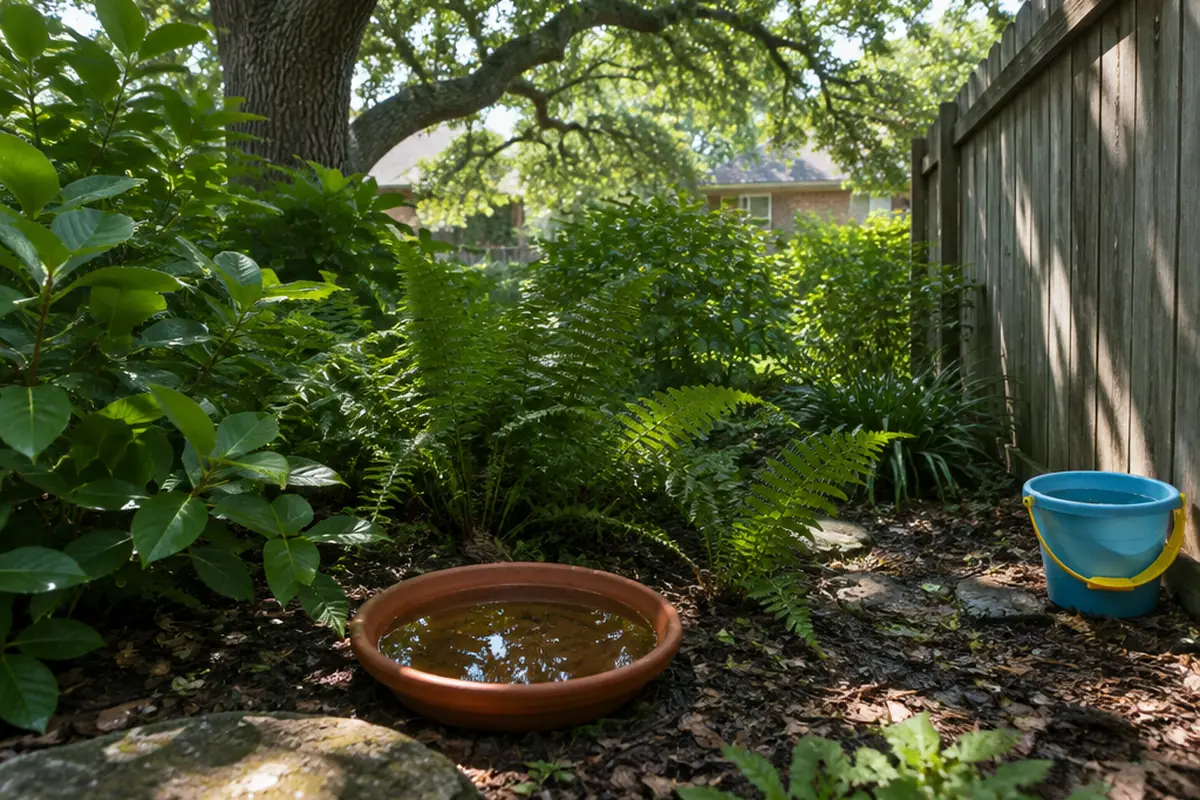
Because these mosquitoes breed in anything that holds water, a flower pot saucer, a clogged gutter, a toy left in the grass, a station that sends larvicide to those hidden spots reaches places a homeowner would never find.
Honestly, the results depend on how they are used. Here is what the published research found:
| Study and setup | Result |
|---|---|
| Florida, 6-month field trial (2021): stations vs. routine control | 57 to 60 percent fewer eggs, larvae, and adults. Only the egg and larva drops were statistically significant |
| Brazil (2025): several station densities | 56 percent fewer eggs at the highest density, no effect at lower densities |
| Gainesville, FL: 3 stations per acre | No measurable effect |
| Gainesville, FL (2026): 12 per acre, open neighborhood | No effect, likely because mosquitoes kept arriving from nearby |
| Hawaii: 2 stations per home | No reduction, with many other water sources competing |
The pattern is clear. In2Care works when there are enough stations placed well and when other standing water is removed, so the stations are not competing with a dozen other places to lay eggs. It is weakest used alone, with too few stations, in a yard surrounded by untreated breeding sites.
That research lines up with how we built our mosquito control service. We place In2Care traps in the shaded spots around your property where mosquitoes rest, then check and refill them on every monthly visit. On the same visits we fog the shrubs, trees, grasses, and shaded areas where adult mosquitoes rest during the day, for fast knockdown of the adults already there, and we tip out anything that has collected standing water. Stations handle the next generation, fogging handles this one, and removing standing water takes away the competition.
For a party, graduation, or outdoor wedding, a one-time fogging treatment before the event is often the better fit. Serving Leander and greater Austin, including mosquito control in Austin. Call (512) 267-0812 for a free estimate.
In2Care is a registered trademark of In2Care. Accurate Termite and Pest Control is an independent pest control company and is not affiliated with the manufacturer.
Quick answers
The product label states that it is not intended for homeowners. In2Care stations are designed to be installed and serviced by pest control professionals, who handle placement, density, and the regular refills the label requires.
The label calls for servicing every 4 to 8 weeks for Aedes mosquitoes and every 4 weeks for Culex, with more frequent water checks in hot, dry weather. We check and refill ours on every monthly visit.
Because it is not built to hold them. Mosquitoes land, pick up the active ingredients, and leave. The fungus kills them within about nine days, usually somewhere else, after they have spread larvicide to other breeding spots.
The active ingredients have low toxicity to mammals, but the label carries a CAUTION signal word and says people and pets should not contact the pesticide, so stations go in out-of-the-way shaded spots. The label also notes it is toxic to fish, so stations stay away from ponds.
They do different jobs. Fogging knocks down the adult mosquitoes in your yard right away. In2Care works slowly across generations by stopping larvae in hidden breeding spots. Research shows stations do best as part of a combined program, which is how we use them.
More posts
The biology that matters for your yard: breeding water, larval timing, and the layered control that works.
Read post →
From fogger chemistry to destroying eggs in standing water, the practical steps that cut mosquito numbers on an Austin property, and when to call the pros.
Read post →
Mosquito biology, the real dangers behind a bite, why DIY products keep disappointing, and the In2Care trap plus fogging approach that actually works.
Read post →If you’re dealing with termites, rodents, or ongoing pest issues, our team is here to help. Call today to schedule an inspection or get a free estimate.