
7 Common Pests Found In Austin And How To Identify Them
Fire ants, spiders, fleas, wasps, and more: the quick field marks that tell you which Austin pest you’re looking at.
Read post →Yes, brown recluse spiders live in Central Texas, including Austin, Leander, and the rest of Travis and Williamson counties. The most reliable way to identify one is its eyes: a brown recluse has six eyes arranged in three pairs, while most spiders have eight.
The famous violin marking helps, but it can be faint, and plenty of harmless spiders carry a similar dark shape. Below is how to identify a brown recluse, where they hide in Texas homes, what a bite actually does (usually far less than the internet suggests), and what really works to control them.
Check several features, not just one. A spider has to match all of them to be a recluse:
| Feature | Brown recluse | Most look-alikes |
|---|---|---|
| Eyes | Six eyes in three pairs: one pair in front, one pair on each side | Eight eyes, usually in two rows |
| Size | Body about 3/8 inch long. With legs, about the size of a quarter to a half-dollar | A body longer than 1/2 inch rules out a recluse |
| Color | One even color, light tan to grayish brown | Often striped, banded, or two-toned |
| Marking | Dark violin shape on the front body section, with the neck of the violin pointing back toward the abdomen | Many spiders have dark markings in the same spot |
| Legs | One solid color, fine hairs, no spines, no bands | Visible spines, stripes, or banding |
| Abdomen | One solid color with no pattern | Patterns, spots, or chevrons |
You will need a magnifying glass or a zoomed-in photo to count the eyes. If a spider has banded legs, spines, or a patterned abdomen, it is not a brown recluse, no matter what the violin looks like. The spiders most often mistaken for recluses include cellar spiders, funnel weavers, and orbweavers. For the other spiders you are likely to find around a Central Texas home, see our spider identification guide.
Texas A&M AgriLife lists several recluse species in the state. The one documented around Austin is the brown recluse, Loxosceles reclusa. Museum specimens have been collected in Austin itself and in caves in both Travis and Williamson counties.
The Texas recluse (Loxosceles devia) is recorded mostly in South Texas and the Rio Grande Valley, and the Big Bend recluse (Loxosceles blanda) in Far West Texas. The species look nearly identical, and everything on this page about hiding spots, bites, and control applies to all of them.
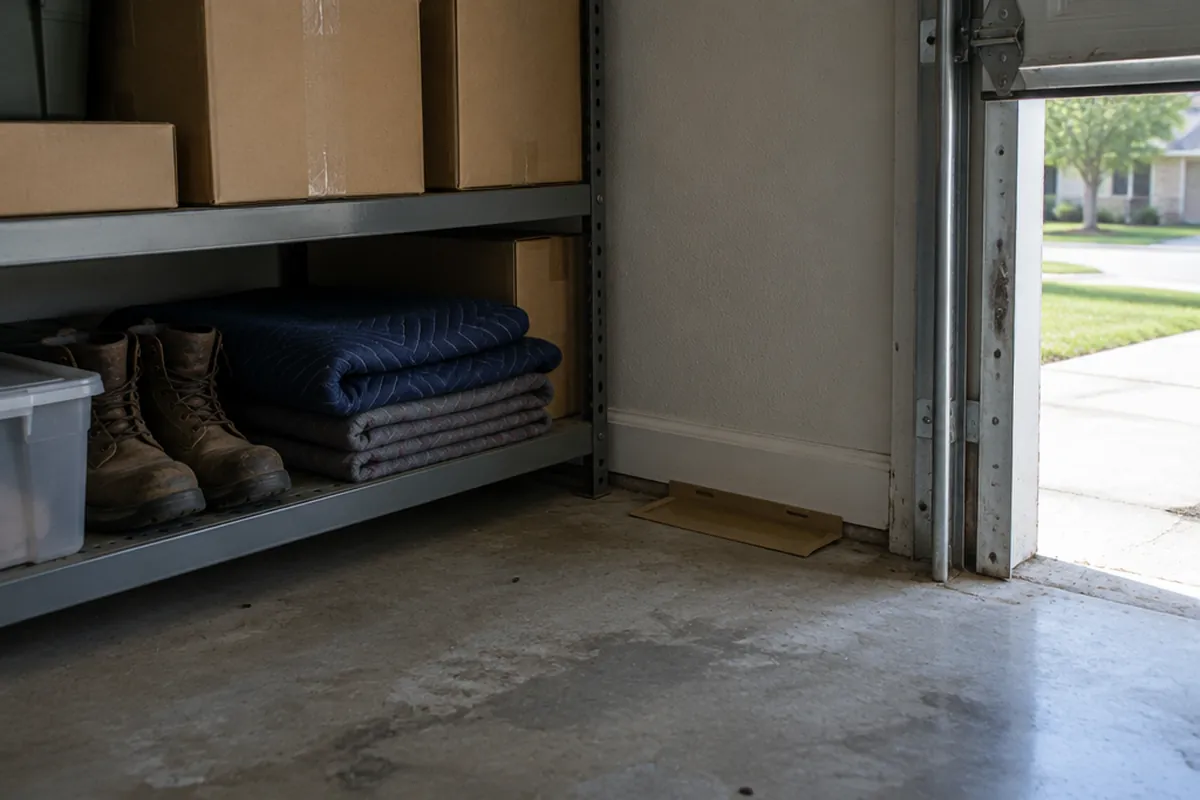
The name says it all: they want dry, dark, undisturbed places. Indoors, that usually means:
Outdoors, they shelter under rocks, logs, old boards, and junk or wood piles. Brown recluses hunt at night and do not use webs to catch prey, so you rarely see them in the open. They can also go many months without food or water, which is why an unused storage room is not a spider-free storage room.
According to Texas A&M AgriLife, brown recluses are active outdoors from spring through fall, and indoors they can be active all year. Mating runs from about April through July, and an adult can live for several years. In a heated or cooled Texas home, there is no off season.
Brown recluses are not aggressive, and they do not chase people. Bites happen when a spider gets trapped against bare skin: pulling on clothes or shoes that have been sitting unworn, rolling onto one in bed, or reaching into a stored box. Their fangs are too small to bite through clothing.
Most bites turn out to be minor. About 90 percent of brown recluse bites heal without severe scarring. The bite is often painless at first, with redness and swelling developing over the next 3 to 8 hours, and most bites resolve within about three weeks. In a minority of cases the skin at the bite breaks down into a dry, sunken, bluish patch that heals slowly. Rarely, and more often in children, the venom causes a whole-body illness that affects the blood and kidneys. Deaths are extremely rare.
It is also worth knowing that many wounds blamed on brown recluses turn out to be something else entirely, such as MRSA and other bacterial skin infections. That is one more reason to have a doctor look at any wound that is spreading or not healing, instead of assuming it was a spider.
This follows guidance from the Texas Department of State Health Services and the CDC. We are pest control professionals, not medical providers, so call a doctor or poison center with any questions.
One study puts the risk in perspective. Researchers collected 2,055 brown recluses over six months from an occupied house in Lenexa, Kansas. The family of four living there had been in the home for eight years, and none of them had ever been bitten (Vetter and Barger, Journal of Medical Entomology, 2002).
The takeaway is not that brown recluses are harmless. It is that they avoid people, and that the right response to finding one is steady, practical control rather than panic.
Honestly, an established brown recluse population is hard to eliminate. Sprays work only when they touch the spider directly, and the University of Kentucky notes that foggers are seldom effective. What works is a layered approach recommended by Texas A&M and university extension services:
Spiders are covered under our home pest control service. If you are catching recluses on sticky traps or finding them in the garage or closets, every visit starts with an inspection to find where they are living before we treat. Free estimates from our Leander and northwest Austin offices, or call (512) 267-0812.
Quick answers
They are established here. Brown recluses have been documented in Austin and across Travis and Williamson counties, and along with the black widow they are one of the two medically significant spiders you are likely to find around a Central Texas home.
No. Their fangs are too small. Bites happen when a spider is already inside a shoe, a sleeve, or bedding and gets pressed against bare skin, which is why shaking out clothes and shoes that have been sitting is one of the best habits you can build.
No. Many harmless spiders have a dark mark in the same area. Look for six eyes in three pairs, legs of one solid color with no spines or bands, and an abdomen with no pattern. A spider needs all of those to be a recluse.
Rarely. Foggers and most sprays only kill spiders they touch directly, and recluses stay tucked into boxes, wall voids, and attics. Monitoring with sticky traps, reducing clutter, sealing entry points, and targeted professional treatment work far better.
Wash the area with soap and water, apply a cold compress, and try to catch the spider for identification. Call the Texas Poison Center Network at 1-800-222-1222, and see a doctor if the wound worsens or you feel sick. Most bites heal without serious injury.
More posts
Fire ants, spiders, fleas, wasps, and more: the quick field marks that tell you which Austin pest you’re looking at.
Read post →
The ten pests our techs find most often across Austin, what each looks like, and why it earns a spot on the list.
Read post →
The pests that move indoors when Central Texas cools off, and how to keep them out.
Read post →If you’re dealing with termites, rodents, or ongoing pest issues, our team is here to help. Call today to schedule an inspection or get a free estimate.