How Dangerous Are Wasps in Austin?
An honest look at sting risk, from a single paper wasp to a disturbed yellow jacket nest.
Read post →Paper wasps, yellow jackets, hornets, and the rest of the late-summer crowd: where they nest, when they get aggressive, and how we remove them safely, since 2000.
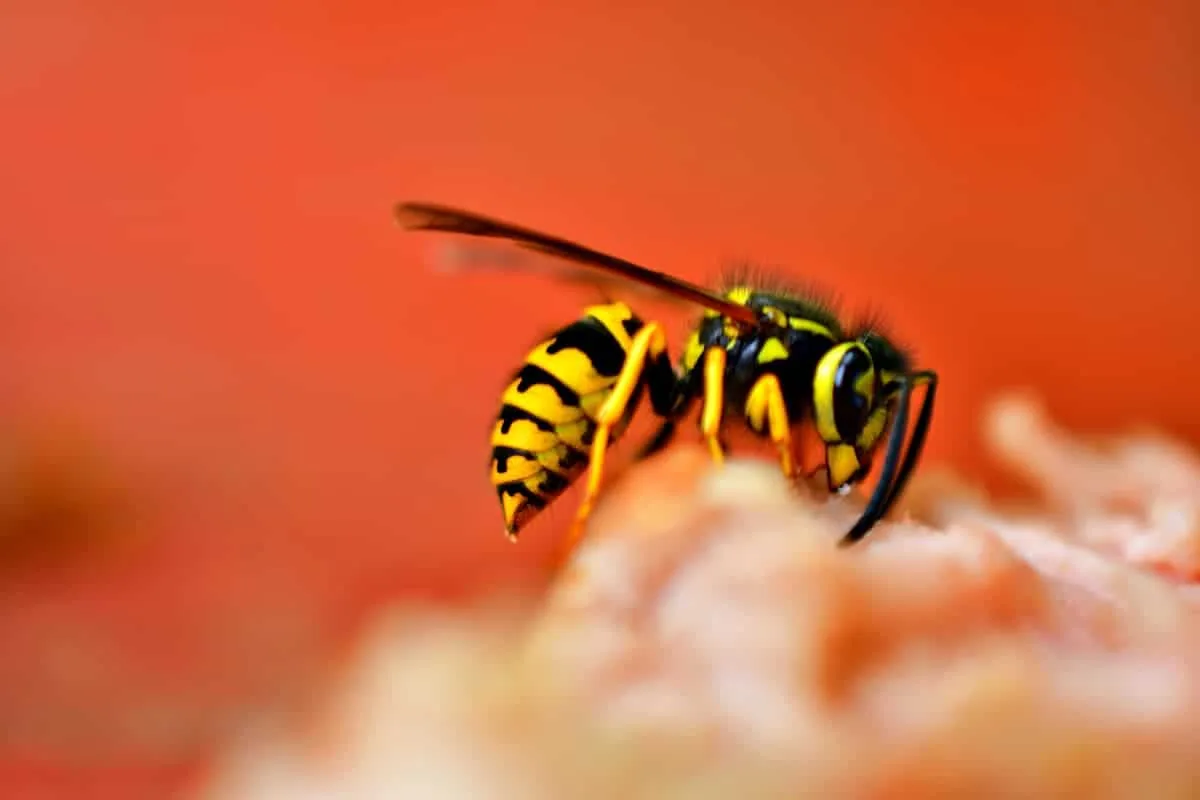
Stinging insects are winged insects that carry a stinger for defense or for taking prey. Around Central Texas that mostly means paper wasps, yellow jackets, hornets, mud daubers, and bumblebees. They all belong to the order Hymenoptera, which also includes ants, so they are distant cousins of the fire ants in every local lawn.
Most of these species are social, building a colony around one queen, though mud daubers work alone and build their little mud tubes solo. Activity ramps through the warm months and peaks in late summer and early fall, when colonies hit maximum size and the workers get noticeably more defensive about the nest. Plenty of these insects do real good as pollinators and pest predators. The trouble starts when the nest goes up ten feet from your back door.
These are among the most medically serious pests in Central Texas. For most people a sting means sharp pain, redness, and swelling that fades within hours. For anyone allergic to the venom, one sting can trigger anaphylaxis, a life-threatening reaction that needs emergency treatment. CDC figures put stinging insects behind hundreds of thousands of U.S. emergency room visits every year.
Unlike a honeybee, which stings once, wasps and yellow jackets sting over and over, and they will when the nest feels threatened. Yellow jackets are the worst offenders. They grow more aggressive as summer ends and account for most sting incidents in late season. If you have kids, pets, or anyone with a known venom allergy at home, treat any nest on the property as a problem to solve now, not eventually.
Your property is offering nest sites, food, or water, probably all three. Each species shops differently: paper wasps hang their open umbrella nests under eaves, overhangs, and deck rails. Yellow jackets like abandoned rodent burrows underground or the voids inside your walls. Hornets build the big enclosed paper globes in trees and shrubs or against structures, and mud daubers stick their mud tubes to exterior walls, garage interiors, and covered patios.
Central Texas hands these colonies a long warm season to grow, and by late summer one yellow jacket nest can hold thousands of workers. Flower beds, gardens, outdoor dining, open trash cans, and standing water all keep them coming through spring and summer.
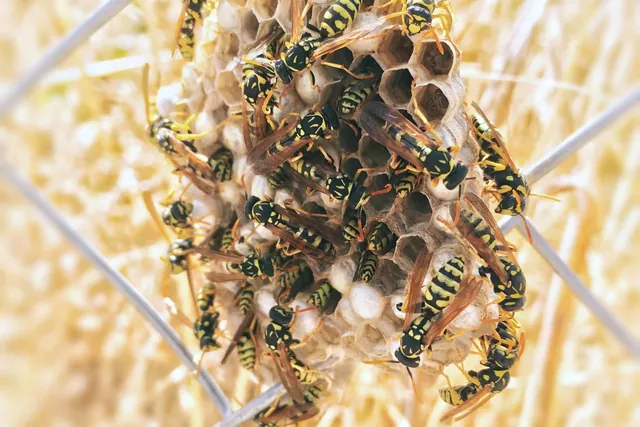
Depends on the species, and some nests hide well until the colony is big. Paper wasps are the easy ones to spot, hanging open honeycomb nests off eaves, porch ceilings, deck rails, and window frames, sometimes right inside a light fixture. Yellow jackets are the hard ones. Underground or inside a wall void, the nest often announces itself only when someone runs a mower over it.
Hornets hang large gray or brown paper nests in trees, tall shrubs, and on upper walls. Mud daubers leave clusters of mud tubes on exterior walls and in garages, barns, attics, and crawl spaces. Bumblebees usually go low: in the ground, in grass clumps, or in old rodent burrows. Any sheltered, undisturbed spot with food nearby is a candidate.
Carefully, or not at all on your own. Disturbing a nest without proper protective gear and products can set off a swarm response, and a dozen stings is dangerous even without an allergy. Yellow jacket nests in wall voids or underground are the most hazardous to attempt, because you cannot see how big the colony is or where it will pour out.
Accurate Termite and Pest Control has removed stinging insect nests around Cedar Park, Leander, and Austin for over 25 years, with the protective equipment, professional-grade products, and experience the job actually calls for. If the nest is large or established, leave it alone and call. Get in touch about our wasp and nest removal service and get a free estimate.
The goal is to make your property a bad place to build a nest. Our techs recommend:
You can also read about our home pest control and commercial pest control programs.
Keep learning
An honest look at sting risk, from a single paper wasp to a disturbed yellow jacket nest.
Read post →
Where the hardware store spray can works, and where it puts you in the emergency room.
Read post →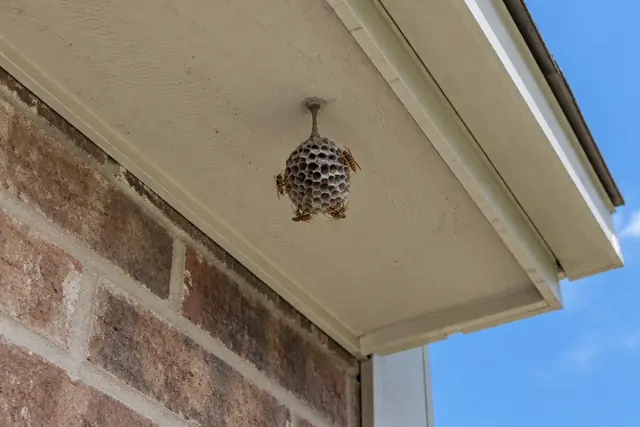
Safe nest removal plus the recurring protection that keeps new colonies from settling in.
See the service →Free estimate
Whether by phone or by filling out our appointment form, we will help answer your questions, provide you with a free estimate, or get you scheduled for the services you need.
If you’re dealing with termites, rodents, or ongoing pest issues, our team is here to help. Call today to schedule an inspection or get a free estimate.