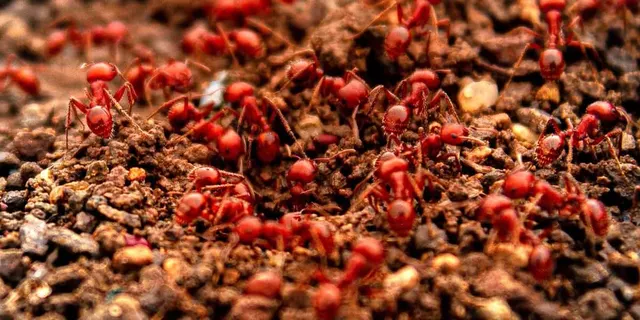
Why Do I Have Fire Ants on My Austin Property?
What draws colonies to a yard, and why the mounds keep coming back after rain.
Read post →Fire ants in the yard, carpenter ants in the walls, sugar ants in the kitchen: how to tell them apart and hit the colony, not just the trail, since 2000.
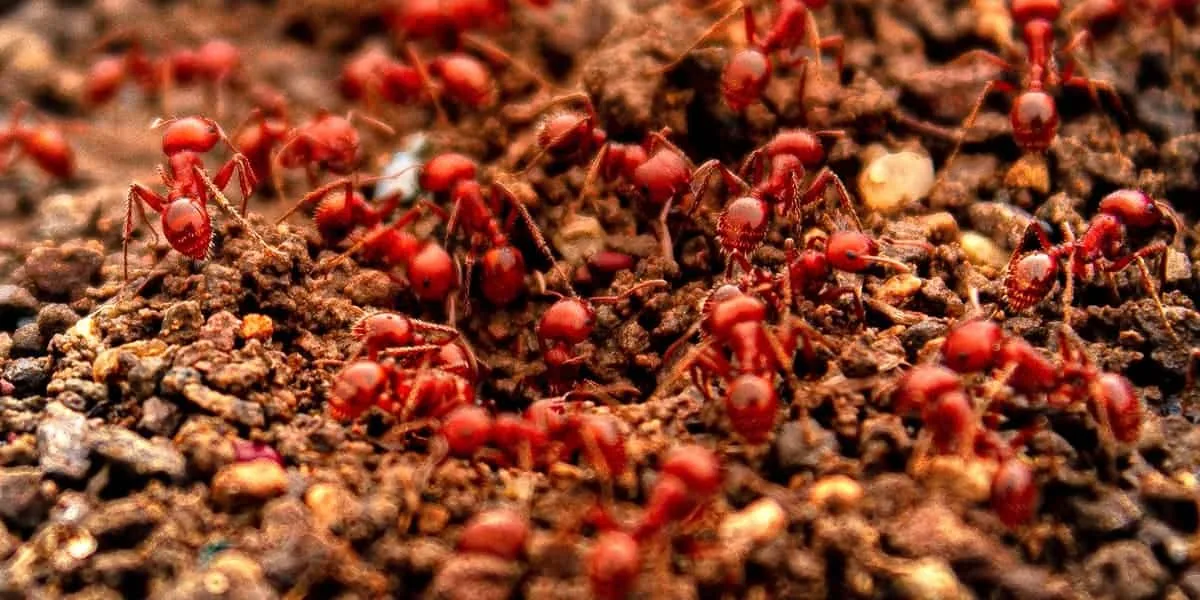
Ants are among the most numerous insects on earth, living on every continent but Antarctica. They are social to the core: colonies run from a few dozen members to several million, organized around workers, males, and one or more queens. The whole operation runs on pheromones, chemical signals ants use to mark food trails, navigate, and sound the alarm.
That trail system is why one ant on the counter becomes a hundred by dinnertime. Most species are a nuisance and nothing more. A few that live here, fire ants especially, are a genuine hazard to people and pets, which is why knowing which ant you have matters. If you are trying to sort out the big red ants in your yard, see fire ants vs red ants.
Most are not, but the exceptions live in Central Texas. Fire ants are the serious one: aggressive, quick to swarm, and each ant stings repeatedly. For most people that means burning welts. For some, the venom triggers severe allergic reactions up to anaphylaxis, and pets nosing around a mound are just as exposed.
Carpenter ants pose a different threat. No venom to speak of, but they excavate galleries through the wood of your house to nest in, and given time that becomes structural damage. Even the harmless species, odorous house ants and pavement ants, contaminate food and become genuinely difficult to evict once a colony gets established indoors.
Ants forage constantly for food, water, and shelter, and a typical home offers all three. Yards near woods, gardens, and anywhere with a moisture issue draw colonies first. In the Central Texas climate ants stay active most of the year, peaking through spring and summer.
A trail inside the house means scouts found food or water and told the colony. The route in is usually a foundation crack, a gap at a door or window, or a utility penetration, the same small openings every other pest uses.
Follow the species. Fire ants build the dome-shaped mounds you see in open sun: lawns, parks, pastures. Carpenter ants want moist or decaying wood, which puts them in wall voids, attics, and anywhere the house has had water damage. Odorous house ants and pavement ants nest under slabs, stones, and mulch and along driveway and sidewalk edges.
Indoors, the trails lead where the resources are: kitchens, bathrooms, laundry rooms, anywhere food debris or moisture collects.
Spraying the trail kills scouts and leaves the colony untouched. Worse, some over-the-counter products scatter a colony into multiple satellite colonies, which multiplies the problem. Effective ant control reaches the source, including the queen, or the trails just keep coming back.
Accurate Termite and Pest Control has treated ant problems across Central Texas for over 25 years, from fire ant mounds in the yard to carpenter ants working through a wall. Our treatments are built to take out the whole colony and keep it from rebuilding. Get in touch about our ant control services or give us a call today.
Ant prevention means closing the doors and clearing the table. Our techs recommend:
You can also read about our home pest control and commercial pest control programs.
Keep learning
What draws colonies to a yard, and why the mounds keep coming back after rain.
Read post →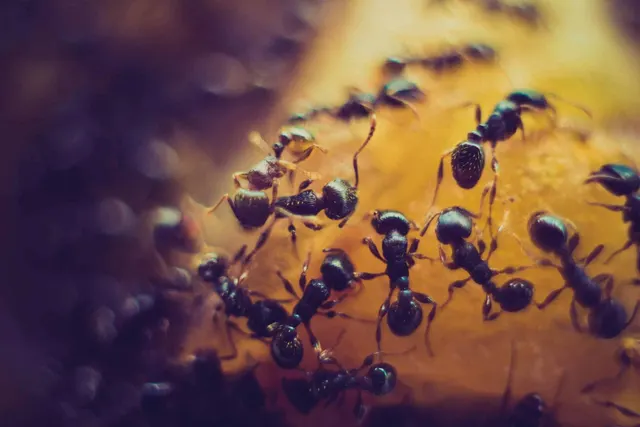
Colony-level control versus trail spraying, and why one works and the other multiplies the problem.
Read post →
Colony-level fire ant and general ant treatment for Central Texas yards and homes.
See the service →Free estimate
Whether by phone or by filling out our appointment form, we will help answer your questions, provide you with a free estimate, or get you scheduled for the services you need.
If you’re dealing with termites, rodents, or ongoing pest issues, our team is here to help. Call today to schedule an inspection or get a free estimate.